Women’s Human Rights

Women and girls make up 51.1 percent of the total population of the Democratic People’s Republic of Korea. The Constitution, Gender Equality Law and number of other laws provides for gender equality in many areas, however, women are still considered inferior to men due to the deep-rooted discriminatory stereotypes. Women are under-represented in leadership positions. The state reinforces cultural and social values ascribing a particular role to women as caregivers and subservient to men.

Fundamental Freedoms

The Democratic People’s Republic of Korea maintains near complete control over all aspects of people’s lives, denying freedom of opinion, expression, association, thought, conscience and religion.  State surveillance permeates all areas of life to suppress any criticism of the State, creating a climate of fear and mistrust within the community.  Citizens have no access to information from independent sources, including from outside the country. The State dictates where people must live and work, with permission required to leave the assigned province.

Abductions/Disappearances

Enforced disappearance is a serious crime that continues to be committed until the fate and whereabouts of every disappeared person has been clarified, and consequently the individual criminal responsibility also extends over those who currently have control of the crime. Enforced disappearances, including in the form of international abductions, remain a serious concern in the Democratic People’s Republic of Korea with the whereabouts of thousands of individuals remaining unknown.

Arbitrary Detention/Torture

There are consistent and credible accounts of arbitrary detention, torture and ill-treatment in detention facilities in the Democratic People’s Republic of Korea. Such acts may amount to violation of the Convention against torture and other international norms prohibiting torture in all its forms, but may also constitute the crimes against humanity of imprisonment, torture, enslavement, or “other inhumane acts of a similar character causing serious injury to body or to mental or physical health”.

Accountability

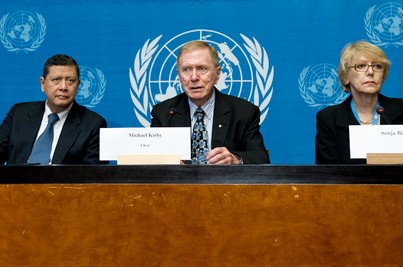
In its 2014 report, the commission of inquiry on human rights in the Democratic People’s Republic of Korea concluded that there were reasonable grounds to believe that crimes against humanity had been committed and continued to be committed in the Democratic People’s Republic of Korea. It highlighted that the gravity, scale and nature of those violations revealed a State that did not have any parallel in the contemporary world.

Other Special Procedures

The DPRK has not issued standing invitation to special procedures mandate holders.

The Special Rapporteur on the rights of the persons with disabilities conducted an official visit to the Democratic People’s Republic of Korea in May 2017. This is the only official visit by the Special Procedures to the country.

Report of the Special Rapporteur on the rights of the persons with disabilities on her visit to the Democratic People’s Republic of Korea